Your quote
There are no more items in your quote
Buying the Perfect Leather Couch (A Guide) | Cielo
-
Categories :
Living Room
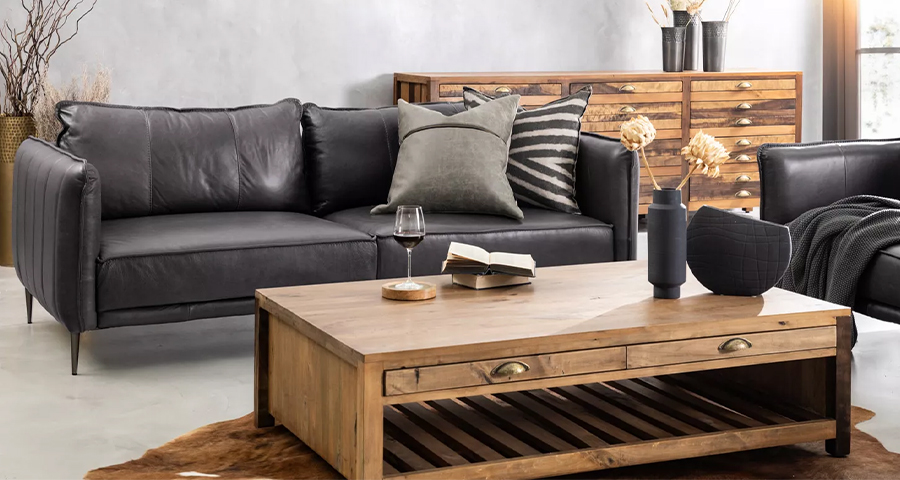












Featured Product: Ottavia 3-Seater Leather Couch - Charcoal
Buying a leather couch may feel a bit like shopping for a new car. And we’re not just talking about the feeling that you have arrived (congrats on that, by the way). You probably have some ideas of what you like, but you may not be entirely sure what you need to look for ‘under the hood’. Just like cars, there’s a lot more to leather than meets the eye, and there’s no mistaking that not all leathers are created equal – not by a longshot. So it’s important to know exactly what you’re buying if you want your investment to pay you back in comfy, stylish dividends for years and decades to come.
Well, you’ve come to the right place to find out all you need to know about buying a leather couch or lounge suite. We’ll guide you through the most important questions so you can shop with confidence and soon be seated on your prize leather couch with smiles for miles.
To choose a leather couch that’s going to suit your lifestyle, and get you the best bang for your buck, you’ll obviously want to start with knowing what your choices are, which options offer the best quality, and which you’ll want to avoid.
When a hide is processed in the tannery, it’s split horizontally into two main layers:
Keeping these two categories in mind, here are the most common types of upholstery leather and what’s important to know about them:
Full grain is widely accepted to be the leather of leathers. It’s the most natural, beautiful and durable leather you’ll find – and unsurprisingly, the most expensive, since only the best quality hides are used. The term ‘full grain’ refers to the fact that the top-grain layer is used in its entirety without changes made to the natural grain – no polishing, sanding, touch-ups, or add-ons for this prize hide. This means that every piece of full grain leather furniture has its own unique character. And with age, it only gets better, becoming more supple and developing a beautiful patina that just ups the charm factor. Full grain is naturally moisture-resistant and, because nothing is added to the surface, it remains exceptionally soft and breathable, meaning it quickly adjusts to body temperature. The only downside is that it can be vulnerable to oily stains and scuffs. On the other hand, the odd scratch will only add to a vintage leather look – so you, Fido and your favourite couch can all grow old together. (Want to read more about Leather couches & Dogs?). The bottom line? If you’re after the leather of leathers that will truly last a lifetime, Full grain is your ticket to ride.
In upholstery, top grain becomes a more specific label rather than just referring to the ‘top grain layer' in general. This type uses hides that may have more blemishes, where the outermost layer of natural grain is sanded down to remove the irregularities, and then embossed with an artificial and more uniform ‘corrected’ grain. A thin finish coat is also applied to provide some stain resistance. The leather stays quite soft and supple but is a little more prone to stretching out over time, and a bit less breathable due to the coating. It’s not quite as durable as full grain, since the toughest outer fibres have been removed, but does come with a slightly more affordable price tag.
Nubuck and Suede are both popular for their soft, velvety feel. The important difference is that Suede is made from the split layer, while Nubuck is a form of Top grain where the surface has been sanded down to give it a fuzzy texture, or ‘nap’. Nubuck is the better quality (and pricier) choice for upholstery, as it’s naturally stronger and more resistant to wear, though will still be vulnerable to water damage and stains without an added protective finish.
PU leather (also known as Bicast leather) is made from lower quality layers of split leather. The split layer is given a synthetic topcoat of polyurethane which is then imprinted with an artificial grain. Although it has a leather component, it’s an example of faux leather because its contact surface is artificial. PU leather upholstery is not a good choice on its own as it doesn’t have the durability and comfort factors of high quality leather, but it can be used as an alternative on parts of a couch that don’t see much contact (such as the back and side panels), to help provide more affordable options to consumers.
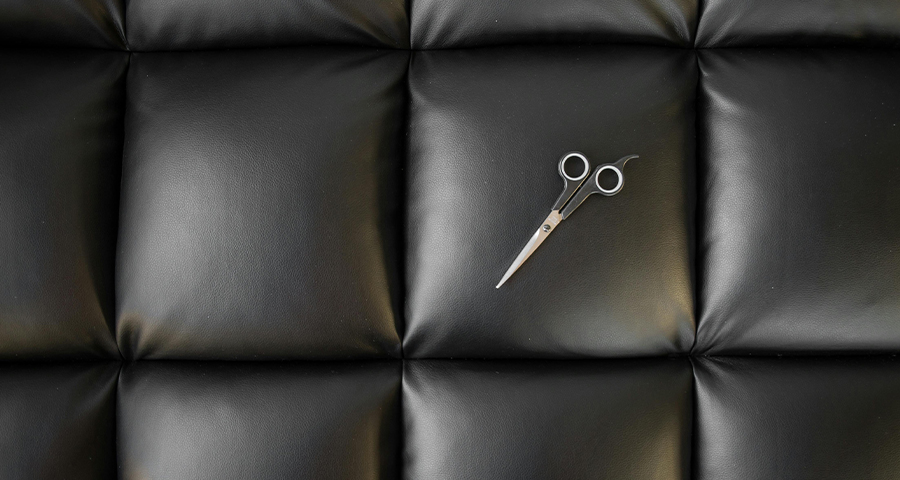
Take the scraps and offcuts that are left when all the other leather cuts have been taken, mince them up with some synthetic ingredients, flatten and glue to a backing sheet, emboss an artificial grain, and, voila! Bonded leather. It’s basically the polony of leather. Not a great option for upholstery if you’re looking for a quality long-term investment. But it is a sustainable use of leather that avoids waste, and it gets turned into hundreds of useful products – many of which you probably use on a daily basis (think book covers, cell phone holders, briefcases). Go polony leather! (Just go away from our couches, please).
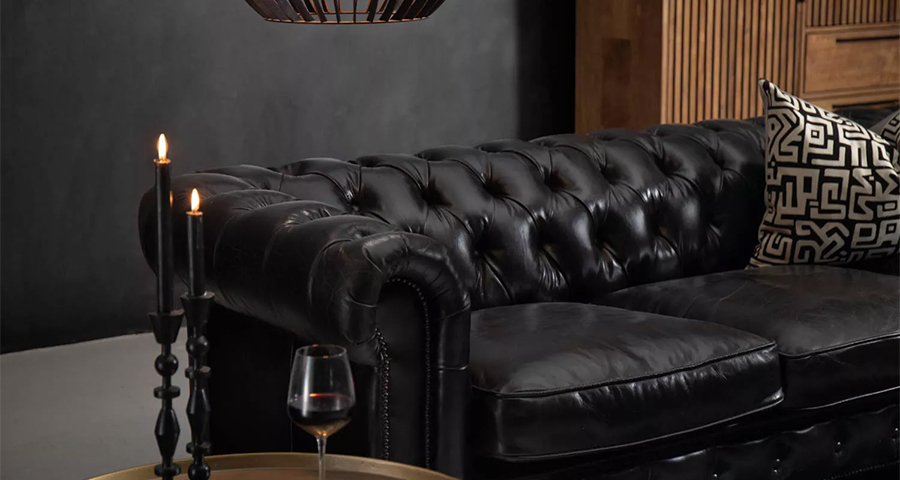
Featured Product: Jefferson Chesterfield 3-Seater Leather Couch - Distressed Black
Apart from the grade of the leather, the other main factor that affects the look, feel and quality of leather upholstery is the dyeing and finishing process that’s used. We’ve already touched on some of the types of finishes above – ranging from the less intrusive kinds of embossing and top-coating for stain resistance, to applying completely synthetic top layers. When it comes to achieving a rich and uniform colour, leather is commonly dyed in one of three ways:
Choosing the best kind of leather for your home and lifestyle isn’t a one-size fits all kind of deal – there are always pros and cons to take into account. Here are some general recommendations that we hope will help you make the best decision to suit your needs:
This is an upholstering method where high quality leather (Full grain or Top Grain) is only used on the parts of the couch that see a lot of traffic (ie. the seats, seat backs, and usually the armrests). For the rest of the couch, a lower cost alternative such as PU leather or another kind of fabric is used. This makes for more affordable leather couches that still offer the main benefits of high quality leather, where the alternative upholstery that’s used won’t usually impact much on the overall lifespan of the piece.
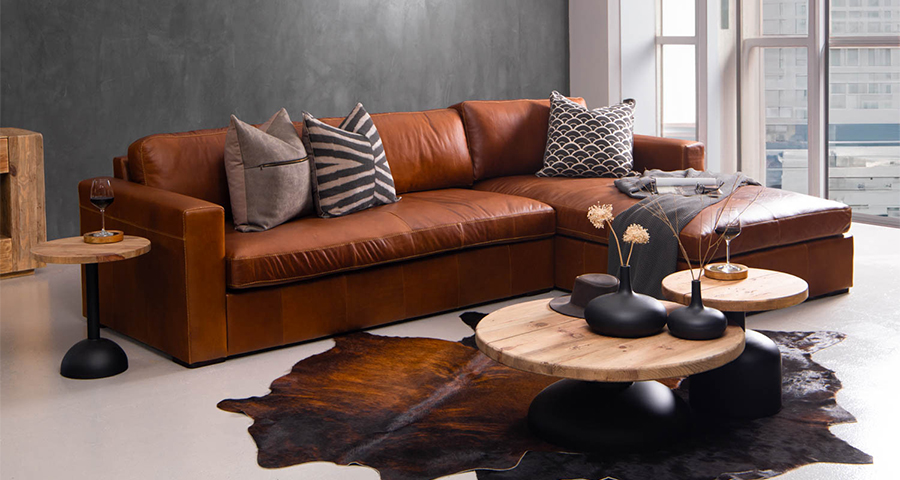
Featured Product: Archer Leather L-Shape Couch - Burnt Tan
When you’re about to invest in furniture you hope will last you a lifetime (or at least a few decades), it’s always good to ask a few questions to get the peace of mind you deserve.
Long story short, when you’re planning to buy leather furniture, it pays to do your research. Now that you know what your options are and what’s likely to be the best buy for you and your home, you can get out there and find the perfect addition to inspire your space and have you relaxing in high style for many years to come.
At Cielo, we pride ourselves on our wide range of superior quality leather couches, lounge suites and recliners at the best value for money. View our impressive selection online or pop in to a showroom near you to see for yourself.